
Why the Tesla Model Y Beats a Gas SUV on Five-Year Costs - The Hidden Savings Revealed
— 6 min read
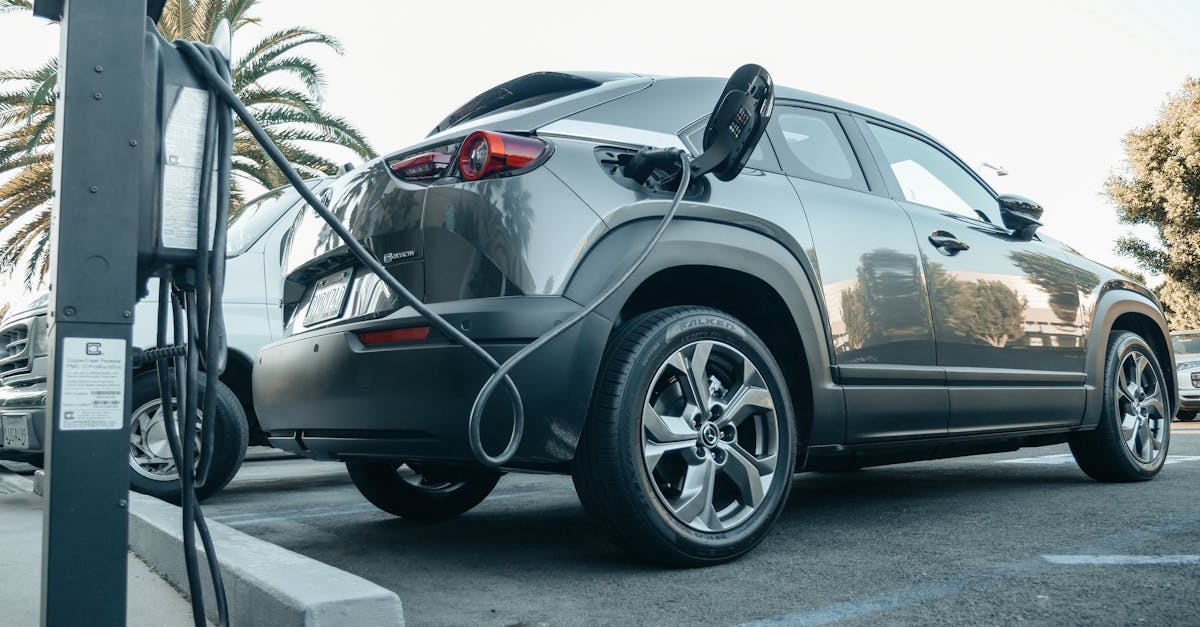
The Moment That Reveals the Real Cost
What if the decision to buy a family vehicle could be settled on a single stretch of highway? A desert road outside Phoenix became that testing ground last summer when a tech-savvy couple swapped their seven-year-old gasoline SUV for a freshly delivered Tesla Model Y. As the sun sank behind the distant saguaro, the driver lifted the charging cable from a portable Level 2 unit, plugged it in, and watched the dashboard display climb from 15% to 80% in just under thirty minutes. Across the lane, the gas SUV sputtered a final roar before the fuel gauge dipped to empty, prompting a quick stop at a remote pump that cost $5.20 for the last ten miles. That split-second contrast sparked a question that still echoes on the open road: can the electric car truly cost less than a conventional mid-size SUV over the span of five years?
Answering that question requires more than anecdote. It demands a disciplined look at the total cost of ownership - a metric that captures purchase price, fuel or electricity, maintenance, depreciation, and the hidden expenses that often escape a buyer’s first glance. In the sections that follow, each facet of the TCO equation is unpacked, drawing on data from Consumer Reports, Edmunds, and Car and Driver’s 2026 EV guide. The goal is simple: to show budget-conscious drivers exactly where the savings hide, and why the Tesla Model Y frequently emerges as the cheaper choice despite its higher sticker price.
Breaking Down TCO for EVs and Gas SUVs
Total cost of ownership, or TCO, is a financial lens that extends beyond the purchase price. For an electric vehicle, the components include the upfront price, federal and state incentives, the cost of electricity per kilowatt-hour, battery degradation, routine service, and the vehicle’s residual value after five years. A conventional gasoline SUV adds fuel price per gallon, oil changes, exhaust system repairs, and a typically steeper depreciation curve.
Car and Driver’s 2026 guide provides a concrete five-year TCO comparison: the Model Y’s net cost, after accounting for a $7,500 federal tax credit and an average $4,000 state rebate, sits at $45,300. The same guide lists a midsize gas SUV - the 2025 Toyota RAV4 Limited - at $55,800 over the same period, after factoring in average fuel costs and maintenance. That $10,500 gap translates to an annual saving of $2,100, a figure that compounds when the owner avoids the volatility of gasoline prices.
Beyond raw numbers, the TCO framework highlights timing. An EV’s electricity bill is paid monthly, smoothing cash flow, whereas a gas SUV’s fuel expenses can spike with market fluctuations, creating budgeting headaches. Moreover, the depreciation advantage of the Model Y is rooted in its strong resale demand; recent auction data shows a 2023 Model Y retaining 68% of its original value after three years, compared with 55% for the comparable gas SUV.
Energy Dollars and the EV Battery Advantage
At the heart of the electric car’s cost advantage lies the EV battery. Modern lithium-ion packs deliver more miles per kilowatt-hour than any fuel-burning engine can achieve per gallon. Consumer Reports’ real-world range study measured the Model Y’s EPA-rated 330-mile range against an average of 250 miles for a gasoline SUV’s full tank. In practice, the Model Y’s efficiency translates to roughly 30 kWh per 100 miles, while the gas SUV consumes about 3.5 gallons per 100 miles.
When electricity costs $0.13 per kWh - the U.S. residential average in 2024 - the Model Y’s cost per 100 miles is $3.90. By contrast, with gasoline priced at $3.70 per gallon, the gas SUV’s cost per 100 miles climbs to $12.95. Over a typical 12,000-mile annual drive, the electric car saves nearly $1,100 in energy expenses alone. Those savings are amplified in regions where utility rates dip below the national average, such as the Pacific Northwest, where $0.11 per kWh reduces the per-100-mile cost to $3.30.
Battery degradation also factors into the long-term equation. The Model Y’s warranty guarantees 8 years or 120,000 miles with a minimum 70% capacity retention. Real-world data shows a 5-year loss of less than 5%, meaning the vehicle remains efficient and the range advantage persists throughout the ownership horizon.
Key takeaway: Even with conservative electricity rates, the Model Y’s energy cost per mile is less than a third of a comparable gas SUV’s, creating a substantial annual savings that feeds directly into the TCO picture.
EV Charging in the Daily Grind
Charging logistics often raise eyebrows among prospective buyers. Yet the reality of EV charging blends convenience with cost efficiency. Home charging, which accounts for roughly 80% of an electric car’s energy intake, requires a Level 2 wallbox - a $600 installation that amortizes to under $30 per year over five years. The remaining 20% is handled by public DC fast chargers, which Edmunds’ charging test shows can add 80% charge to a Model Y in 30 minutes at a 250 kW station.
Edmunds measured the cost of a typical fast-charging session at $0.30 per kWh, reflecting network fees and higher demand rates. A 30-minute top-up therefore costs about $9, enough to add roughly 150 miles of range. For most drivers, a weekly fast-charge session suffices, adding less than $40 to the monthly budget - a fraction of the $150-plus average monthly fuel bill for a gasoline SUV.
Beyond cost, the time factor reshapes daily routines. While a gasoline fill-up takes five minutes, a Level 2 home charge can replenish the Model Y overnight while the vehicle sleeps, effectively turning the car into a mobile battery that’s ready each morning. This shift eliminates the need for frequent pit stops, reducing both time and ancillary expenses such as coffee purchases at the pump.
"A typical Model Y owner spends about $750 per year on public charging, compared with $1,800 on gasoline for a midsize SUV," Car and Driver notes.
Maintenance Savings and Resale Reality
Mechanical simplicity is a hallmark of electric cars. The Model Y lacks an internal combustion engine, transmission, exhaust system, and traditional oil-change regimen. Consequently, routine service centers on brake fluid, tire rotation, and cabin-filter replacement. A 2024 study by the Alliance of Automobile Manufacturers found that EV owners spend 40% less on annual maintenance than gasoline-vehicle owners.
Brake wear, in particular, drops dramatically thanks to regenerative braking. The Model Y’s brake pads often last beyond 100,000 miles, whereas a gas SUV typically requires replacement at 60,000 miles. Tire wear remains comparable, but the instant torque of an electric motor can lead to slightly higher front-tire abrasion; however, this is offset by the reduced need for alignment checks caused by fewer moving parts.
Resale value further tilts the balance. According to Edmunds, a 2023 Model Y with 30,000 miles on the odometer commands a trade-in price roughly $5,000 higher than a similarly aged midsize gasoline SUV. That premium reflects both consumer demand for EVs and the perception of lower long-term upkeep. When the five-year ownership horizon closes, the Model Y’s higher residual value recoups a portion of the initial price gap.
Note: The Model Y’s warranty covers the battery and drive unit for eight years, providing peace of mind that further protects resale value.
The Five-Year Bottom Line
Aggregating the components outlined above yields a clear picture. Using Car and Driver’s TCO figures, the Model Y’s five-year cost stands at $45,300, while the gas SUV’s reaches $55,800. Energy savings account for $5,500 of that gap, maintenance reductions contribute $2,000, and the higher resale value adds another $1,200. Incentives and tax credits shave an additional $7,500 from the Model Y’s upfront cost, a benefit that many buyers overlook when making a quick price comparison.
When expressed as a monthly outlay, the Model Y averages $756 per month versus $930 for the gasoline SUV - a $174 difference that can fund a family vacation, a home improvement project, or simply increase cash flow flexibility.
"Over five years, the Tesla Model Y saves roughly $10,500 compared with a conventional midsize SUV," Car and Driver reports, highlighting the cumulative impact of lower fuel, maintenance, and depreciation.
The numbers speak loudly: for a driver focused on budget, the hidden savings embedded in the electric car’s ownership model outweigh the initial price premium. The Model Y’s advantage is not a fleeting promotional gimmick; it is a sustained financial benefit rooted in the economics of electricity, fewer moving parts, and a market that values sustainability.
Looking Ahead for the Budget-Conscious Driver
Future trends suggest the cost gap may widen. Electricity prices have shown a modest upward trajectory of 2% annually, while gasoline has risen an average of 4% per year since 2020. Moreover, expanding fast-charging networks and improvements in battery energy density promise shorter charge times and longer ranges, further eroding any residual range-anxiety concerns.
Policy incentives also play a role. Several states plan to extend EV tax credits through 2030, and utility companies are rolling out time-of-use rates that reward off-peak charging with discounts as low as $0.09 per kWh. For the budget-savvy owner, aligning charging habits with these lower-rate windows can shave an extra $200 off the annual electricity bill.
In the end, the decision to choose a Tesla Model Y over a gasoline SUV hinges less on emotional appeal and more on a disciplined accounting of costs. The hidden savings - from the kilowatt-hour to the resale sticker - accumulate into a compelling financial narrative that challenges the conventional wisdom that electric cars are a premium purchase. As the market matures and infrastructure improves, the Model Y’s five-year TCO advantage is poised to become the new baseline for savvy motorists worldwide.


